
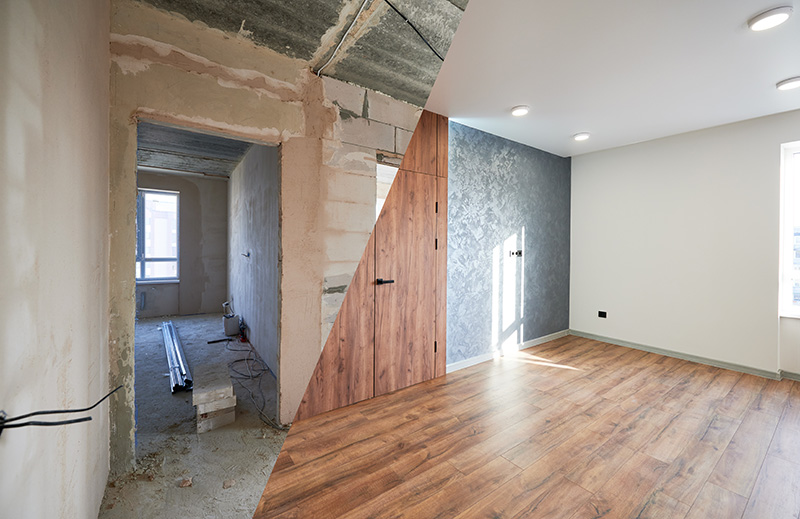
Finding a promising investment property is only the first step in a successful fix and flip.
You also need enough capital to purchase the property, complete the renovations, cover holding costs, and keep the project moving until it is ready to sell. When timing matters, waiting several weeks for a traditional bank loan can cause an investor to lose a good opportunity.
Fix and flip financing gives qualified real estate investors access to short-term capital based on the property, the renovation plan, the borrower’s experience, and the expected exit strategy.
For investors working in Springfield and throughout Greene County, New Heritage Group offers practical real estate financing designed around the needs of the project.
What Is Fix and Flip Financing?
Fix and flip financing is a short-term real estate loan used to purchase and renovate a property that an investor plans to resell.
These loans are commonly used for properties that need improvements before they can be sold to a homeowner or qualify for traditional long-term financing.
Funds may be used for expenses such as:
- Purchasing the property
- Roofing and exterior repairs
- Plumbing and electrical work
- Heating and cooling systems
- Kitchen and bathroom renovations
- Flooring and paint
- Structural repairs
- Landscaping and cleanup
- Contractor and material costs
Unlike a standard home mortgage, fix and flip financing is structured around an investment project rather than a borrower’s plan to live in the property.
Why Investors Use Fix and Flip Loans
Traditional banks are built for conventional loans. They may be less comfortable financing distressed properties, major renovations, short holding periods, or transactions that need to close quickly.
A bank may also require extensive documentation, appraisals, inspections, and approval steps before releasing funds.
That process can work for some investments. It may not work when a property is priced to sell quickly or when the seller expects a short closing timeline.
Fix and flip financing can provide a more flexible option for qualified investors who need to:
- Make a competitive offer
- Close on a property quickly
- Purchase a house that needs major repairs
- Fund renovations after closing
- Complete a project before listing it for sale
- Avoid tying up all of their available cash in one property
Fast financing does not mean automatic approval. The lender still needs to evaluate the property, budget, borrower, and proposed exit plan. However, a locally managed private loan may move more quickly than a traditional bank process.
Why Greene County Is an Attractive Market for Rehab Investors
Greene County includes a mix of established neighborhoods, older housing, rental properties, suburban communities, and homes that may benefit from repairs or modernization.
Investors may find opportunities involving:
- Outdated homes
- Estate properties
- Vacant houses
- Rental properties needing repairs
- Homes with deferred maintenance
- Properties damaged by previous occupants
- Houses that may not qualify for conventional financing in their current condition
A successful fix and flip is not simply about buying the least expensive property available. The goal is to find a property where the purchase price, renovation costs, holding expenses, and expected resale value leave enough room for a reasonable return.
Local knowledge is important. Renovation expectations, buyer demand, resale values, and contractor costs can vary between neighborhoods, even within the same city.
What Lenders Consider When Reviewing a Fix and Flip Loan
A lender usually evaluates the entire project rather than looking at only the borrower’s credit score.
The purchase price
The property should be purchased at a price that makes sense when compared with its current condition and potential resale value.
The after-repair value
The after-repair value, often called the ARV, is an estimate of what the property may be worth after the planned renovations are completed.
The ARV should be supported by comparable sales rather than an overly optimistic projection.
The renovation budget
A detailed renovation budget helps the lender understand what work will be completed and how much capital the project may require.
A good budget should account for labor, materials, permits, cleanup, and unexpected expenses.
The borrower’s experience
Previous renovation or real estate investment experience can help demonstrate that the borrower understands project timelines, contractor management, and resale preparation.
New investors may still be considered, but they should be prepared with a strong plan and a qualified team.
The borrower’s investment
Lenders often want borrowers to have some of their own capital committed to the transaction. This helps align the borrower’s interests with the success of the project.
The exit strategy
The lender needs to understand how the loan will be repaid.
For most fix and flip projects, the primary exit strategy is selling the completed property. A backup plan may include refinancing the property and holding it as a rental if the home takes longer to sell than expected.
How to Prepare Before Applying for Rehab Financing
The more organized you are, the easier it is for a lender to evaluate the opportunity.
Before requesting financing, gather the following information:
- Property address
- Purchase price
- Purchase contract, if available
- Photos of the property
- Estimated renovation budget
- Description of the planned improvements
- Estimated after-repair value
- Comparable sales
- Expected renovation timeline
- Contractor information
- Amount of cash available for the project
- Proposed resale price
- Primary and backup exit strategies
A lender may request additional documentation depending on the property and loan structure.
Providing clear information at the beginning can reduce delays and help identify potential problems before closing.
How Much Should You Budget for a Fix and Flip?
One of the most common mistakes investors make is focusing only on the purchase price and renovation estimate.
A complete project budget should also consider:
- Closing costs
- Loan fees
- Interest expenses
- Property taxes
- Insurance
- Utilities
- Lawn care
- Trash removal
- Permit costs
- Contractor overruns
- Real estate commissions
- Seller closing costs
- Additional holding time
Rehab projects rarely go exactly as planned. A contingency reserve can help cover hidden damage, material price changes, contractor delays, and other unexpected expenses.
Buying the property correctly is important, but controlling the renovation budget is often what determines whether the project remains profitable.
How New Heritage Group Helps Greene County Investors
New Heritage Group provides real estate financing for qualified investors working on property opportunities in Springfield, Greene County, and the surrounding area.
Because we are locally based, we can review the property and the project with an understanding of the regional market.
Our process generally begins with a review of:
- The property and purchase price
- The requested loan amount
- The renovation scope and budget
- The estimated after-repair value
- The borrower’s experience and available capital
- The proposed timeline
- The repayment and exit strategy
Every loan is evaluated individually. Rates, terms, funding amounts, borrower contributions, and closing timelines depend on the specific property and transaction.
Our goal is to provide a clear lending process that helps qualified investors move forward without unnecessary delays.
Tips for Completing a Successful Rehab
Financing can help you acquire the property, but the renovation still needs to be managed carefully.
Build a reliable contractor network
Do not wait until after closing to begin looking for contractors. Identify dependable professionals before the project begins.
Prioritize improvements buyers care about
Focus on repairs and updates that improve the property’s safety, function, appearance, and marketability.
Avoid spending heavily on upgrades that are unlikely to increase the resale price.
Track expenses throughout the project
Small changes can quickly add up. Maintain a current budget rather than waiting until the renovation is complete to total the expenses.
Avoid unrealistic timelines
Weather, inspections, material availability, and contractor schedules can cause delays. Build some flexibility into your project plan.
Prepare a backup exit strategy
A property may take longer to sell than expected. Consider whether refinancing and renting the property could be a reasonable alternative.
Get Funding for Your Next Greene County Investment Property
A strong fix and flip opportunity can disappear quickly. Having a financing relationship in place before you make an offer can help you evaluate properties more confidently and respond when the right project becomes available.
New Heritage Group works with real estate investors who need short-term capital to purchase, improve, and reposition qualified properties.
Whether you are preparing for your first rehab or adding another project to your portfolio, our team can review the property, renovation plan, and proposed exit strategy.
Contact New Heritage Group to discuss fix and flip financing for your next investment property in Springfield or Greene County, Missouri.
Disclaimer
This article is provided for general educational purposes and does not constitute financial, legal, tax, or lending advice. Financing is subject to property review, underwriting, borrower qualifications, available collateral, and final approval. Loan amounts, rates, terms, and closing timelines vary by transaction. Real estate investments involve risk, including renovation delays, cost overruns, changes in property value, and the possible loss of invested capital.